
RE
Our Year 6 Chaplaincy Team
Religious Education at St Walburga's
In 2023, the Catholic Bishops of England and Wales published a Religious Education Directory (RED) which confirmed their requirements for the RE curriculum for pupils aged 5 - 14. The document established the norms for RE in Catholic schools, set age-related outcomes and outlined a model curriculum for children from Foundation Stage to pre-GCSE. The model curriculum is a Bible-centred approach to teaching RE, which asks what the Catholic Church teaches about scripture and what this means for Catholics today.
At St Walburga's School, we teach RE following the 'Lighting the Path!' resource. The title is taken from Psalm 129: 'Your word is a lamp to my feet and a light to my path.' The resource will lead learners along a path that teaches them about the story of the revelation of God in Sacred Scriptures, the teachings and traditions of the Catholic Church and the beliefs and practices of Catholics around the world today. It will help children develop creative and critical skills, encouraging them to explore religious beliefs and form personal responses.
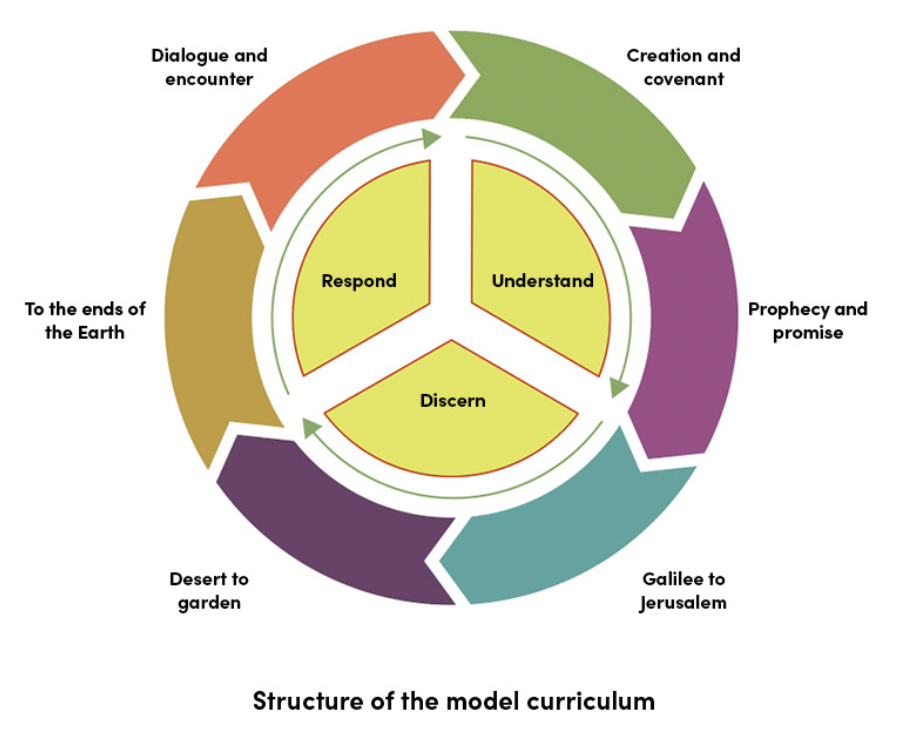
The six branches
The model curriculum has six annual themes, or branches, which map onto the six half terms of the school year. The branches follow the liturgical cycle of the Church's year. The spiral structure of the curriculum enables children to build up layers of knowledge, deepening their understanding each year through their growing knowledge of scripture, enriched by the Christian tradition of art and music. Knowledge steps ensure progression and allow children to reflect on what their learning means for them.
Branch 1: Creation and covenant
In this branch, children encounter Bible texts where God creates and calls people. Children will explore the Christian belief that everything comes from God through the texts of the Book of Genesis and the reflective thoughts of the Psalms. Children will hear accounts of God's love for people expressed in the covenants (promises) found in the Old Testament.
Branch 2: Prophecy and promise
Linking with the Advent season, this branch teaches the mystery of the birth of Jesus, the Messiah, promised by God. Children will also learn how Christians read the stories of the prophets of the Old Testament and discern how the teaching within these stories points to a fulfilment of God's promise.
Branch 3: Galilee to Jerusalem
In this branch, children will learn about the ministry of Jesus and travel with different gospel writers as they hear accounts of Jesus' life, listen to parables and learn how Jesus' teaching underpins Christian beliefs and actions through the work of the Church today.
Branch 4: Desert to garden
Children study the liturgical season of Lent in this branch, the events of Holy Week, culminating in the death of Jesus on the cross. The branch ends in the Garden of Resurrection, where children will learn about the risen Jesus and the centrality of this event to Christian life.
Branch 5: To the ends of the earth
In this branch, children will hear about the events that flow from the Resurrection and Ascension of Jesus, the actions of the apostles and the establishment of the early Church. They will make links between the liturgy, sacraments and structures of the Catholic Church today and its foundations in the world of the apostles.
Branch 6: Dialogue and encounter
In this branch, children will learn about Christianity as a global religion. They will encounter different faiths and learn how all people can work together to promote the common good.
The knowledge lenses
The RED set out the areas of study that the children will 'look' at in six knowledge lenses. Four lenses look at the study of Catholicism (hear, believe, celebrate, live), and two explore different religions and religious world-views (dialogue and encounter).
The Ways of Knowing
The three ways of knowing: understand, discern and respond, set out the different skills children should acquire as they study RE. They focus on critical thinking and personal assimilation, as well as remembering information.